2026 Homesteading report shows increase in Americans choosing self-sufficiency
The 2026 report from Tractor Supply highlights top homesteading activities and potential savings for households
 21 July 2026
 9 minute read
 By:
By: Homesteading has deep roots in tradition, but a new generation of households is now finding modern ways to incorporate it into their day-to-day lives. From growing their own food to keeping backyard chickens, more people are finding small ways to be more self-sufficient at home while also cutting costs, building skills, and taking a more hands-on approach to everyday life.
To better understand what’s driving this shift, we surveyed 1,000 U.S. adults who either currently practice homesteading or are interested in starting. The findings highlight where people are starting, how those habits build over time, and why more households are getting involved.
Key Findings
- Among people who practice homesteading, 86% say that the recent price of groceries has influenced their interest in growing or producing their own food at home.
- People who practice homesteading report saving $480 a year (median) by reducing their spend on goods and groceries.
- Homesteaders who raise chickens or other poultry report the highest median annual savings ($1,200).
- The most popular homesteading activities are growing fruits, vegetables, and herbs, growing indoor plants, baking goods from scratch, food preservation, and sewing or mending clothes.
- YouTube is the number one source of homesteading education and inspiration (62%).
- The top three reasons people homestead are as a hobby or creative outlet (48%), to access fresher, healthier food (44%), and to save money on groceries (41%).
- The majority of people say homesteading has improved their sense of personal pride or confidence (89%), creativity (85%), and sense of security or self-sufficiency (83%).
How Americans homestead
From growing their own food to learning practical skills, people are finding different ways to get into homesteading. We asked respondents which types of activities they practice, their top motivations, and how much they estimate they save by cutting down on goods or groceries.
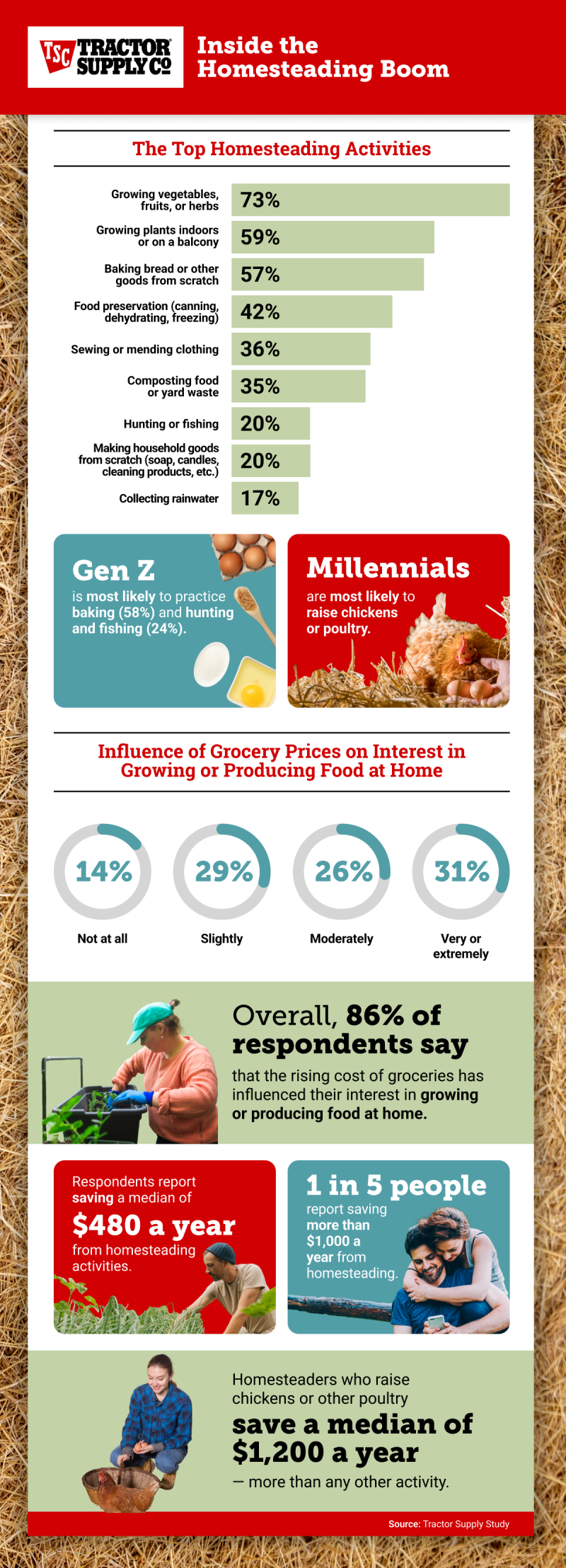
According to our respondents, the most common homesteading activities Americans practice are growing their own vegetables, fruits, or herbs (73%), followed by indoor gardening (59%) and baking from scratch (57%).
Everyday skills like food preservation (42%) and sewing or mending clothing (36%) are also fairly common, showing how these habits can build over time.
There are some interesting generational differences behind these habits. Younger audiences are experimenting more, while older generations lean into traditional skills:
- Gen Z is most likely to bake from scratch, hunt or fish, and raise animals
- Millennials are leading the way in raising backyard chickens
- Gen X focuses on food preservation and making household goods
- Baby Boomers are most likely to grow vegetables and mend clothing
This growing interest in raising poultry, especially among Millennials, suggests that more households are exploring what it takes to keep chickens at home, from setting up a coop to caring for the birds day to day.
As grocery prices keep rising, many people are looking for ways to cut costs at home. For some, homesteading offers a solution.
On average, homesteaders reported saving about $480 a year, though for some it’s quite a bit more—around one in five say they’re saving over $1,000 a year. Those raising chickens or other poultry reported the biggest savings, closer to $1,200 a year.
This financial benefit, combined with the flexibility of starting small, like testing out DIY coops or browsing chicken coop ideas and designs, makes homesteading feel more accessible than ever.
At the state level, homesteading is becoming a more practical, everyday way for households to save money. Residents in North Carolina, Georgia, and Ohio are the most likely to say rising costs have strongly influenced their behavior, while Texas, New York, and Florida report some of the highest median annual savings from homesteading ($600).
Top Homesteading States
How people homestead can vary depending on where they live, with different states leaning toward different activities.
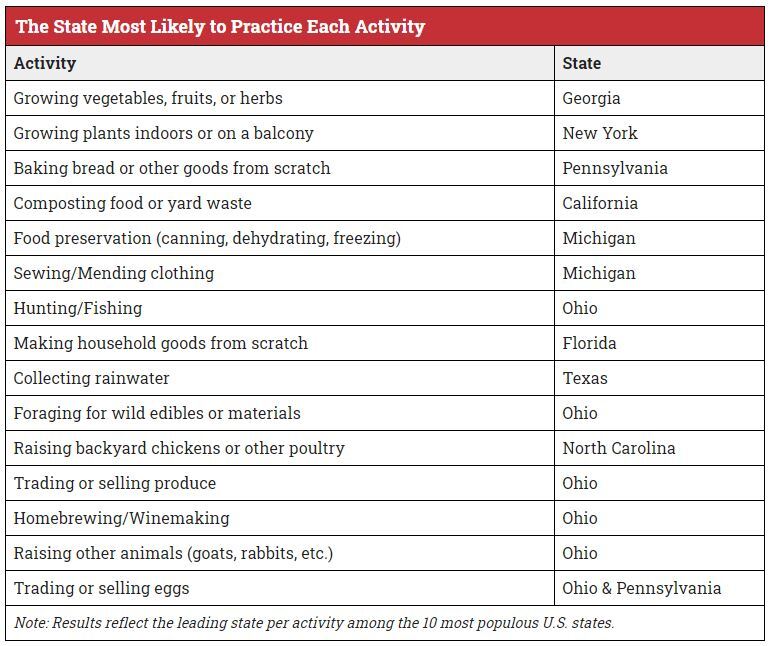
Looking at homesteading across the states surveyed, Georgia is most likely to grow vegetables, fruits, and herbs, while New York leads in indoor and balcony gardening. Pennsylvania is most associated with baking from scratch, and California is the top state for composting.
Michigan appears more than once, leading in both food preservation and sewing, which highlights a continued focus on more traditional, practical skills.
Some states take a more all-round approach. Ohio, in particular, shows up across a wide range of activities, from hunting and foraging to raising animals and trading produce or eggs, making it one of the most varied homesteading states in the group. North Carolina stands out as the state most likely to raise backyard chickens or other poultry, highlighting how central poultry-keeping has become. For many households, raising live chickens or ducks is a natural next step, whether that means starting with simple DIY coops or exploring different chicken coop ideas that fit their space.
What’s clear is that there’s no one-size-fits-all approach. Some people start small with basic setups, while others invest in larger or more flexible options like chicken coops with runs or mobile coops. As interest grows, so does the need for the right setup and supplies—from choosing the right coop size to stocking up on essentials like poultry feed and poultry treats—making it easier to scale up over time.
Top reasons for homesteading
What draws people to homesteading isn’t always the same. For some, it’s about cutting costs, while others are motivated by learning new skills or improving their day-to-day routine.
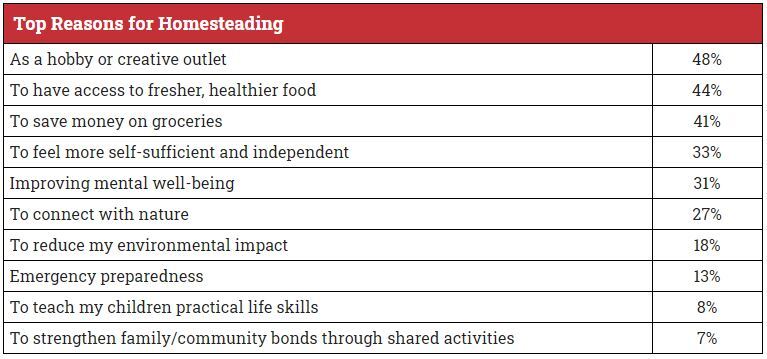
According to current and prospective homesteaders, the most popular reason people are interested in homesteading is as a hobby or creative outlet (48%). Activities such as growing indoor plants, making goods from scratch, and baking all support creativity and could also be considered as rewarding hobbies. Following closely was a desire for fresher, healthier food (44%) and saving money on groceries (41%).
These motivations also shift across generations. Fifty-six percent of Gen Z homesteaders say they approach homesteading as a creative outlet, while Millennials are drawn to connecting with nature and passing on practical life skills. Gen X tends to focus more on saving money and becoming more self-sufficient, while Baby Boomers are especially motivated by access to fresher food and reducing their environmental impact. Together, they show that while the reasons may differ, the appeal of homesteading spans across all age groups.
Top 5 things to know before starting your own chicken coop
Starting your own chicken coop is a great way to get into homesteading, especially as households look for new ways to save on groceries. While it does require some upfront planning, many find that it becomes part of their regular routine over time.
Here are five key things to keep in mind before getting started:
- Choose the right coop for your space: Whether you’re working with a small backyard or more room to expand, your setup should match your space and long-term plans. Small coops are great for beginners, while chicken coops with runs or mobile coops offer more flexibility and room for your flock to move around.
- Plan for daily care and maintenance: Chickens need consistent care, including feeding, cleaning, and egg collection. Stocking up on essentials like poultry feed and poultry treats early on helps keep things simple and ensures your birds stay healthy.
- Start small and scale up: Starting with a few live chickens makes it easier to learn as you go. As you gain confidence, you can expand your setup or explore new chicken coop ideas that better suit your needs.
- Consider costs vs. long-term savings: There’s an initial investment in your coop and supplies, but over time, raising chickens can help offset grocery costs, especially with eggs. Many homesteaders find that even a small setup can lead to meaningful savings.
- Use reliable plans and resources: If you’re building your own setup, following trusted DIY chicken coop plans can make the process much smoother. From simple builds to more advanced DIY coops, having a clear plan helps you avoid common mistakes and get started faster.
With the right approach, raising chickens can be a practical first step into homesteading, one that not only supports your household budget but also gives you more control over where your food comes from.
Homesteading benefits
The benefits of homesteading go beyond what people produce at home. For many people, homesteading affects more than just what they grow or make.
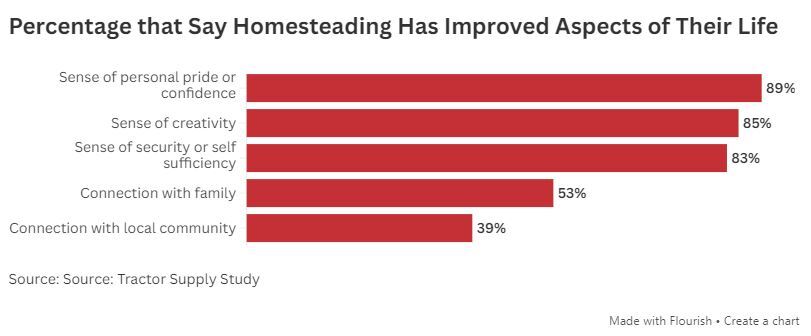
A significant majority of respondents say homesteading has had a positive influence on their sense of personal pride or confidence (89%), creativity (85%), and their sense of security or self-sufficiency (83%). For a lot of people, it’s not just about saving money, but feeling more capable and in control of what they produce at home.
Generationally, Millennials are the most likely to say homesteading has significantly improved their sense of personal pride (48%). There’s also a social side of homesteading, with Gen Z and Millennials more likely to report a stronger connection to their local community.
Modern paths to timeless skills
People learn homesteading skills in a variety of ways. From online platforms to hands-on advice, where people turn often depends on what works best for them.
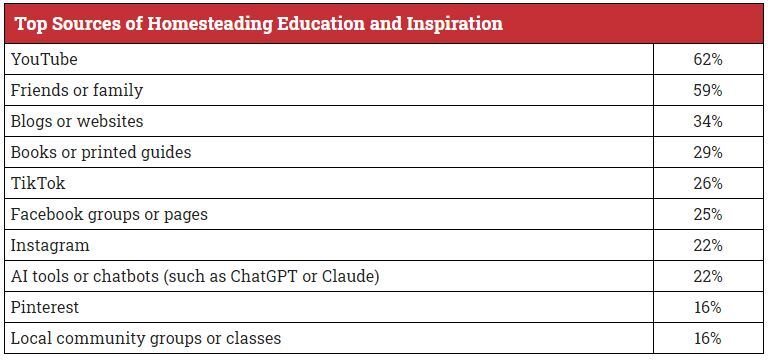
People are learning homesteading skills from a mix of sources. YouTube is the most widely used (62%), but friends and family are close behind (59%), showing that hands-on advice and personal experience still matter. Many respondents shared that homesteading was something passed down to them from parents or grandparents, and that they have shared that same knowledge with their children.
Other sources, like blogs, books, TikTok, and Facebook, are also popular. Rather than relying on just one place, people tend to pick up skills in different ways, whether they’re starting a garden or trying something more hands-on.
Age also plays a role in where people turn to for help. YouTube is the main source for most, but Baby Boomers are more likely to turn to friends or family. TikTok is much more prominent among Gen Z (51%), ranking among their top three sources. Millennials, on the other hand, are the most likely to try AI tools like ChatGPT or Claude to learn new homesteading skills.
Homegrown, reimagined
Many households have begun exploring homesteading in different ways, from small gardens to raising chickens. For many, it’s less about a lifestyle shift and more about finding practical ways to save money and have a bit more control over what they use and consume.
Many households have begun exploring homesteading in small, manageable ways whether it be through a small garden patch or a simple chicken coop that fits the space they have. For most, it's less about overhauling a lifestyle and more about finding practical ways to save money, eat better, and feel a little more connected to what they consume.
If you're interested in getting started with homesteading, keeping chickens can be a surprisingly accessible entry point. Many basic chicken coops can fit a variety of spaces and are suitable for a range of experience levels. For those ready to take that first step, Tractor Supply offers a wide range of chicken coops and supplies to help you find a setup that fits your space and your goals.
Methodology
To explore Americans' homesteading behaviors and sentiments, we surveyed 1,000 U.S. adults who either currently practice homesteading or are interested in starting. Respondents were screened to confirm active or intended participation in home-based, self-sufficiency activities such as gardening, hunting/fishing, composting, raising animals, or food preservation. Data was collected across the ten most populous U.S. At this sample size, results carry a 95% confidence level with a ±3% margin of error. As with all survey research, findings are based on self-reported data and may be subject to respondent bias.
Fair Use Statement
Feel free to share the findings from this study. We ask that Tractor Supply be credited as the source and that any usage include a link back to this page.